
For Dr. Harry Whitehead, writing is more than a profession—it is a lifelong pursuit, a way of seeing the
world, and an invitation to explore the edges of human experience.
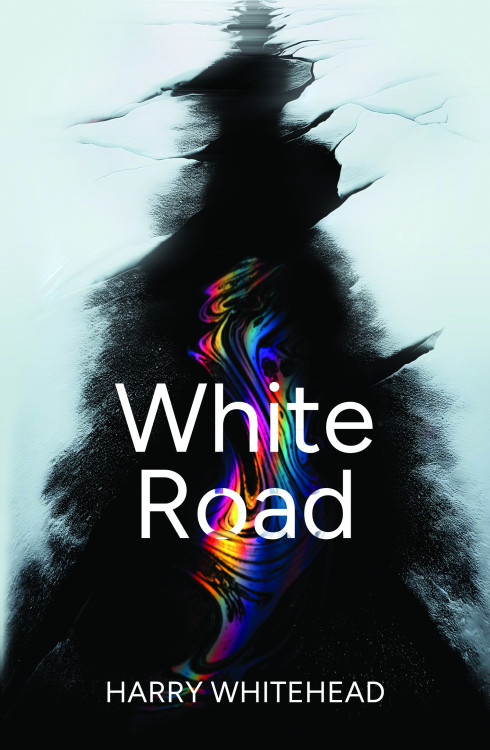
His latest novel, White Road, released at the end of last year, plunges readers into the unforgiving Arctic, where
a catastrophic oil rig explosion triggers a high-stakes adventure that is as thrilling as it is thought-provoking.

Picture credit: Harry Whitehead
The novel, blending environmental awareness, high-octane thriller, and polar adventure, has been met with enthusiasm by readers and critics alike. Yet for Dr. Whitehead, its creation was as much a journey into self-discovery as it was a literary endeavour.
His path to publishing was far from straightforward. He didn’t release his first novel until his 40s, after years of exploration, odd jobs, and living abroad.
“I wasn’t a very organised young man,” he admits. “I had to kick around, do the wrong jobs, move around. But all of that helped me discover what I really wanted to do.”
His life before writing— working in vans, living in the Far East, and eventually entering academia—taught him that the journey itself often provides the insights needed to succeed.
“We live in a society that tells kids they must know exactly what they want to do. In reality, very few of us do. It’s equally important to do the wrong job as it is to land immediately in the right one, because all of it is a process of coming closer to the thing that will be right for you,” he says.
Storytelling, however, has been a constant in Dr. Whitehead’s life. At nine, a school short story contest set him on the path to writing. While other children wrote conventional tales of the nativity, he penned a story about an angry mouse whose home life was disrupted—and won a bar of chocolate.
“I look back on that moment and think—if chocolate comes from writing, there can’t be anything wrong with this process,” he laughs.
Over the years, he continued to write in secret, submitting poems and short stories, honing his craft, and
nurturing the imaginative spark that would one day become a career in fiction.
White Road is the culmination of a lifetime of fascination. The novel centres on Carrie Estler, a daring rescue swimmer navigating the Arctic after a devastating oil rig accident.
Dr. Whitehead was inspired by Sara Fowkner, the first woman in the U.S. to become a rescue swimmer, who faced persistent misogyny while pursuing a career she loved. Carrie embodies courage, resilience, and quiet defiance, navigating both the harshness of the Arctic and the challenges of a male-dominated world.
Supporting her are Jim Ross, the morally conflicted oil rig manager; Joe Amaruk, an Inuit man providing a native perspective; and Jay, an enigmatic environmental activist whose role in the disaster is shrouded in mystery. The novel explores human nature and morality as much as survival in extreme conditions.
The journey to write White Road was as arduous as Carrie’s trek across the Arctic ice. Dr. Whitehead spent years
researching the oil industry, Arctic wildlife, and survival techniques, ensuring every detail was accurate without letting technicalities overshadow the story. “You have to know your onions as a writer—you can’t be found out,” he explains.
One senior oil rig manager endorsed the book, calling it “a superb read,” validating Dr. Whitehead’s effort to capture the industry’s complexity without simplification or bias.
His fascination with extreme environments extends beyond the Arctic. His next novel is set on a Himalayan glacier, and for months, he mentally inhabits the icy world as part of his creative process.
“Once a story takes hold, it occupies both your waking and dreaming hours.”
“When I was writing White Road, the Arctic was always there in my mind. Even in everyday life, I could see the ice, the storms, the wilderness my character was navigating. It’s a total inhabitation of a world,” he says.
This immersive approach allows him to write not just about a place, but to live it on the page, transporting readers into the heart of his settings.
Writing for Dr. Whitehead is also a cinematic experience. Having worked in the film industry, he conceives scenes visually, imagining characters, movement, and dramatic tension as though each moment is unfolding on screen.
He has developed a five-part TV adaptation of White Road, showing how his novels straddle the line between literature and visual storytelling.
“I’ve always imagined my books in terms of actors and filmic structure. It would be amazing if it ever became a film, but even if it doesn’t, imagining it that way shapes the story,” he says.

Picture credit: Harry Whitehead
In addition to writing, Dr. Whitehead directs the Literary Leicester festival and teaches creative writing at the
University of Leicester. He encourages students to embrace writing as a lifelong endeavour, reminding them that mastery comes from dedication, persistence, and curiosity.
“You spend most of your life churning words onto an empty page,” he says, “but every so often, the hard work pays off—you hold the finished book in your hands, and it all feels worth it.”
Literary Leicester, the city’s free writing festival, takes place this year between March 18 and 21. Dr. Whitehead will be leading masterclasses and participating in panel discussions on adventure and environmental fiction, offering attendees a rare glimpse into both the craft and the imaginative process behind his work.
For more information visit: www.le.ac.uk/literary-leicester/events