
For Leicester writer Mayapee Chowdhury, storytelling has never been about playing it safe. It has been about survival, honesty, and ultimately, liberation.
“I’ve been writing pretty much all my life,” she says. “I was a very introverted child, and writing was how I expressed myself. It was never something I thought you could do anything with.”
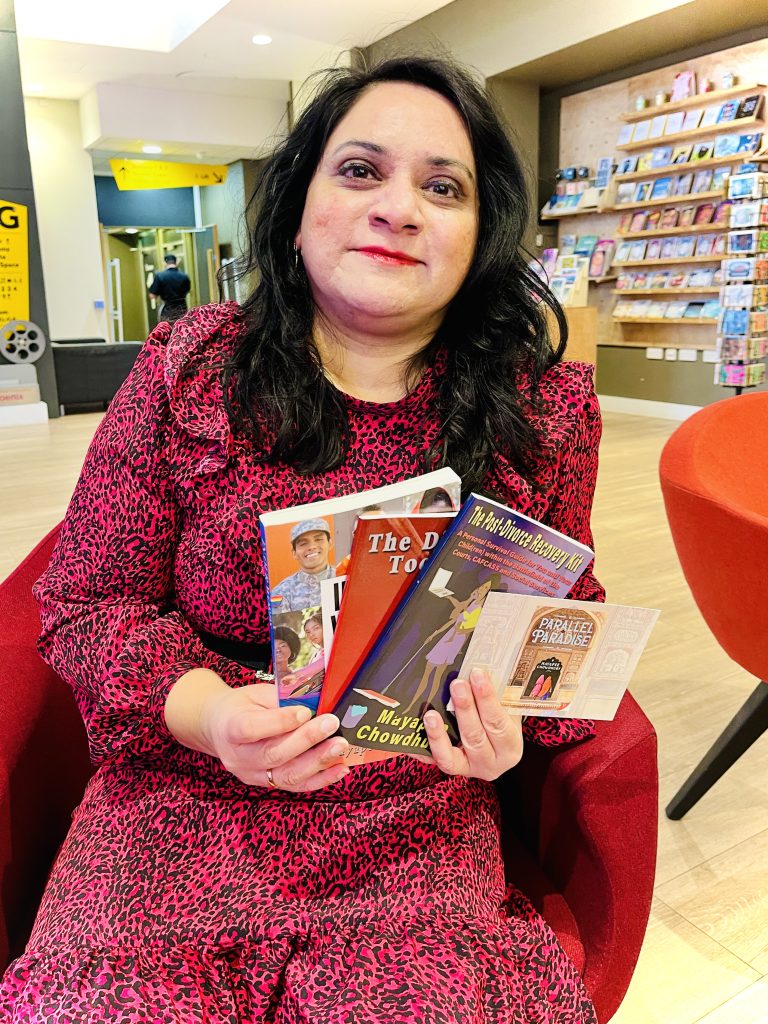
Picture credit: Pukaar News
Raised in a traditional South Asian household, creativity was encouraged only as a hobby. “You were expected to be a doctor, a lawyer – something ‘professional’ if you wanted financial security,” she explains. Writing, in that context, felt indulgent rather than viable.
Yet the instinct to write never left her.
Born in Cambridge, raised across different parts of the UK, and settling in Leicester in 1989, Chowdhury describes herself as “a Leicester girl at heart.” It was Leicester – and particularly its literary community – that would eventually shape her into the bold, genre-defying writer she is today.
The turning point came in 2008, during what Chowdhury describes as a “horrific divorce.” Navigating legal battles while raising a baby plunged her into one of the most traumatic periods of her life.
“Writing absolutely saved me,” she says. “It gave me escapism. It gave me something that was mine.”
That pain would later form the foundation of The Divorce Toolbox, a candid, practical, and deeply personal guide that goes far beyond legalities. Co-conceived with her brother, a solicitor, the book tackles finances, workplace challenges, emotional survival, and the realities of single motherhood.
“So many women kept coming up to me asking for help,” she explains. “We just thought – why isn’t there something that actually tells people what to expect?”
The response was immediate and powerful. Chowdhury was invited onto radio panels, discussion programmes, and eventually became a local radio presenter herself. Most importantly, women reached out to say the book had helped them through their own darkest moments.
“That response meant everything,” she says. “It made being that open worth it.”
Although she had been writing for years, Chowdhury’s journey into publication truly began in 2012 when she joined Leicester’s Phoenix Writers group.

“They gave me confidence,” she says. “The critique is fair, constructive, and supportive. It really helps you grow.”
Through Phoenix Writers, she found other literary circles – poetry collectives, open mic nights, scriptwriting groups – and began performing spoken word while experimenting across genres. Leicester, she says, helped her “find her voice.”
That voice would soon push boundaries.
Chowdhury initially published under a pseudonym, particularly when experimenting with erotica – a genre far outside her comfort zone at the time.
“It was partly lack of confidence,” she admits. “And partly fear. I come from a conservative community.”
But as her work gained acceptance, she made a conscious decision to stop hiding. “I thought, it’s time to break taboos. I can’t worry about what people think anymore. I have to embrace my authentic self.”
That authenticity is perhaps most evident in Parallel Paradise, her bold, sensual LGBT-themed novel.
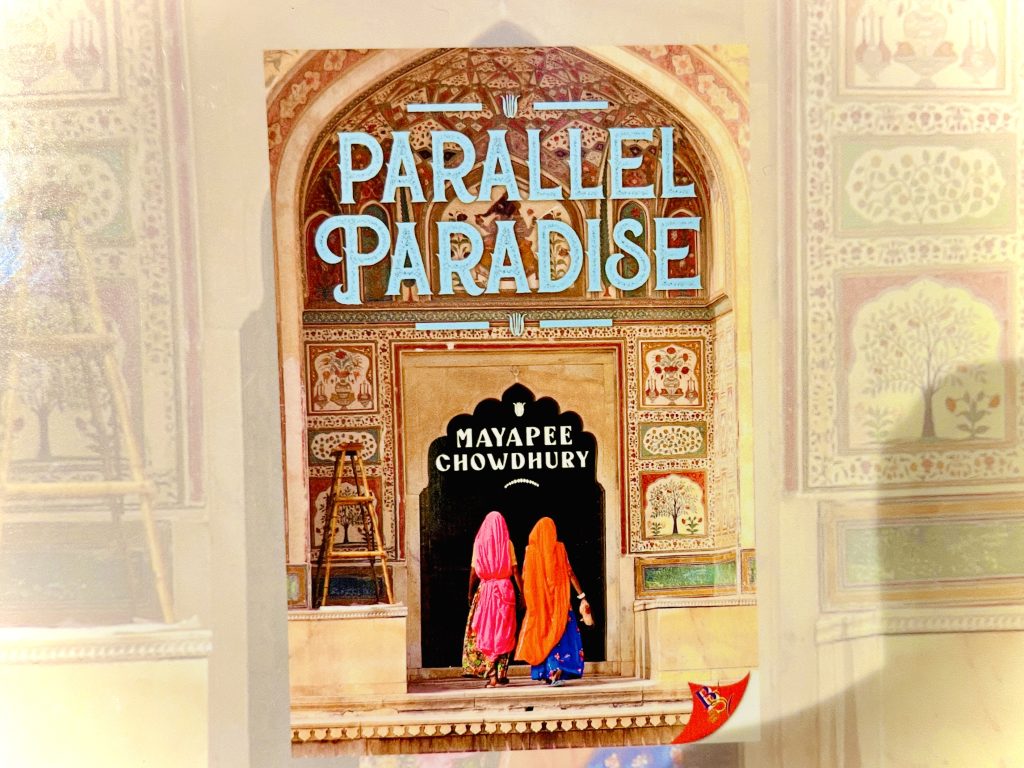
“It’s probably my most daring piece of work,” she says.
The book explores desire, identity, and love without apology. While some may find it provocative, Chowdhury sees it as natural and necessary.
“These are normal human experiences,” she says. “Why shouldn’t they be explored?”
Her fascination with the forbidden goes back to childhood. As a reader, she was drawn to banned books – from Lady Chatterley’s Lover to Judy Blume’s Forever.
“If a book was banned, I wanted to read it,” she laughs. “I always asked, why are we pretending these things don’t exist?”
Within her own community – rooted in Assam, in the northeast of India – Chowdhury is something of a trailblazer.
“I’m the first in my family, and probably my community, to write about divorce, LGBT themes, and erotica,” she says. “So yes, I’m definitely the maverick.”
Chowdhury describes writing as both therapy and escapism – a process that can be emotionally demanding.
“There are times I have to step away,” she admits. “Especially when you’re revisiting dark parts of your life, even through fiction.”
Yet she believes this honesty is essential.
“You can’t be a writer without an authentic voice,” she says. “Especially now – you have to be real.”
She continues to attend Phoenix Writers, having returned after a hiatus during Covid, valuing critique as a way to refine and strengthen her work. “When I read my older writing compared to now, the growth is huge,” she says.
Writing is only one part of Chowdhury’s creative life. She is also an English lecturer, a role that emerged unexpectedly after a World Book Day event led her into education.
“I realised I loved working with young people,” she says. “Teaching and writing overlap in a really positive way.”
She is also a singer-songwriter, performing since the age of seven. In 2016, she taught herself guitar and has since recorded an EP blending spoken word and music. Alongside this, she is currently undertaking a PhD at the University of Derby – inspired, once again, by her writing.
“My life is very full,” she laughs.
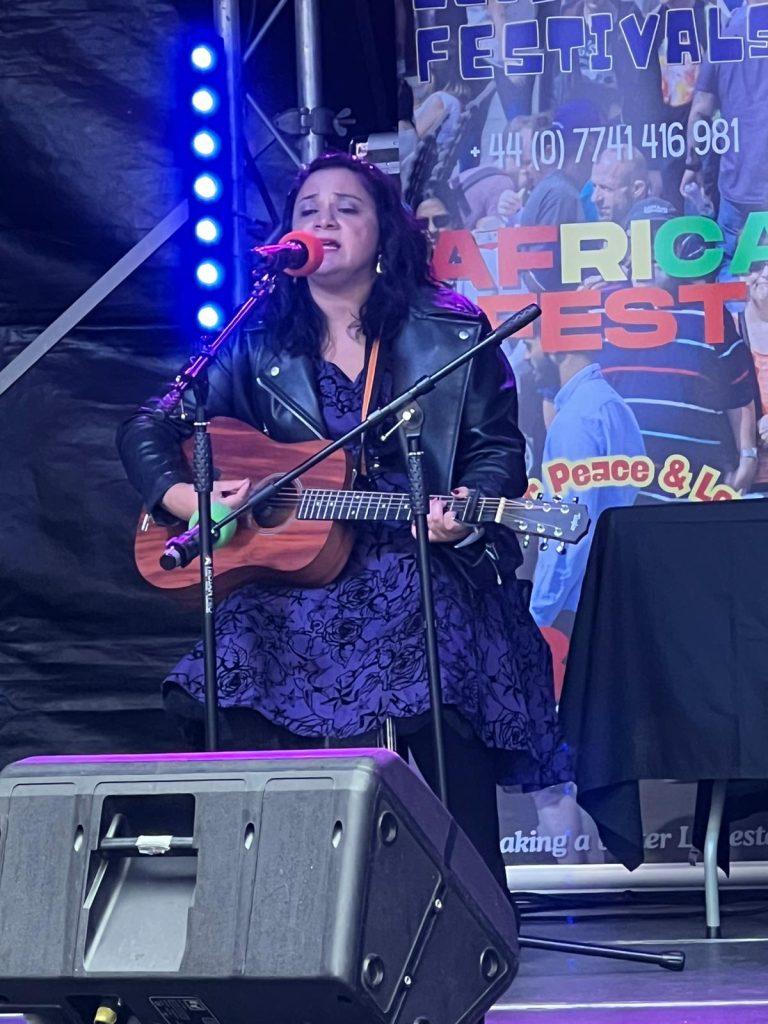
For those afraid to pursue writing seriously, Chowdhury offers grounded advice.
“You don’t have to make millions,” she says. “And you don’t have to write for a market. Write for yourself.”
She stresses the importance of community. “Writing is isolating, so a writers’ group can change everything.”
Above all, she encourages courage.
“That little girl I was never imagined I’d be writing about these things,” she reflects. “But I’m proud I did. I’m proud that I explored them.”
For Mayapee Chowdhury, writing is no longer just expression – it is truth, rebellion, and reclamation. And she shows no sign of quietening her voice now.