
Step into Tim Fowler’s studio in Frog Island and you’re immediately surrounded by colour. Fluorescent pinks, acid greens and electric blues stretch across canvases that lean against brick walls, some barely started, others towering and close to completion. It’s a space that mirrors the artist himself: energetic, confident, and unapologetically bold.
Fowler is one of Leicester’s most recognisable contemporary artists, known for his vibrant plant paintings and large-scale works that blur the line between fine art, street culture and pure visual joy. But the overnight success myth couldn’t be further from the truth.
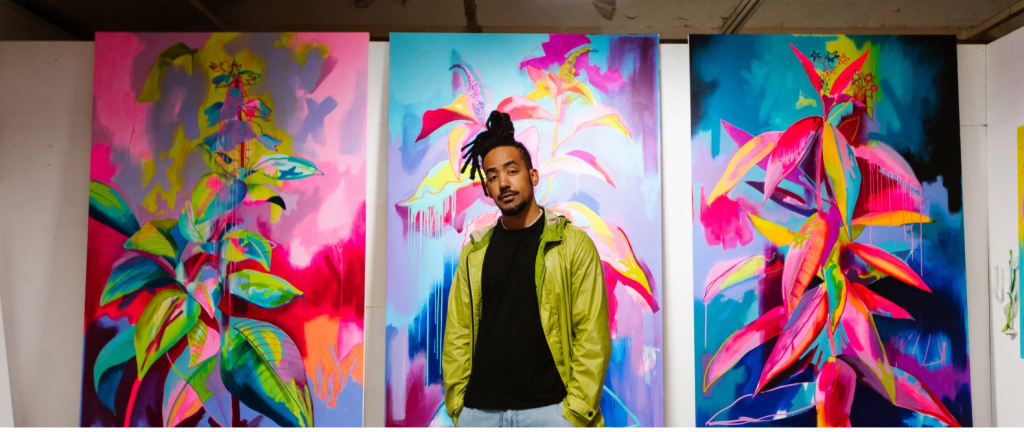
Picture credit: Tim Fowler
“I always wanted to be a professional artist,” he says. “That was the dream. Nothing else. Proper tunnel vision.”
Fowler studied Contemporary Fine Art at Sheffield Hallam University, graduating in 2008 before returning home to Leicester. The plan was simple in theory: make art, build a career, live in the studio. In reality, it took years of graft.
For seven years after graduating, Fowler worked as a teaching assistant in behavioural schools across Leicester, including Keyham Lodge. “I’d finish at three o’clock and go straight to the studio,” he recalls. “The job paid the bills, but my focus was always the art.”
Those early years were about persistence rather than prestige: small art fairs, group exhibitions, self-organised shows and steadily growing social media presence. “It was just plugging away. Year after year.”
That persistence paid off. Around six years ago, Fowler was finally able to go fully self-employed. The leap was daunting – especially with two young children – but regular sales meant it was possible.
“It was stressful at the start,” he admits. “But since then it’s just gone from strength to strength.”
Today, Fowler is represented by Clarendon Fine Art, a major gallery group with around 90 locations across the UK. His work sells nationally and internationally, with collectors in Europe, the US and the Middle East. He’s collaborated with brands including Bombay Sapphire and Porsche, even being flown to Rome for a major event.
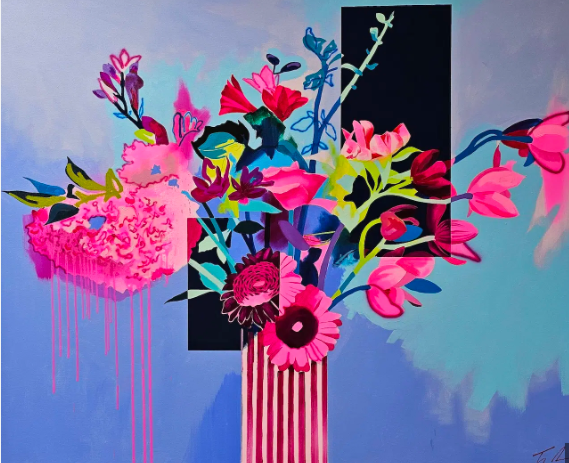
Yet his instantly recognisable style – bright palettes, loose forms and expressive mark-making – was never a calculated branding exercise.
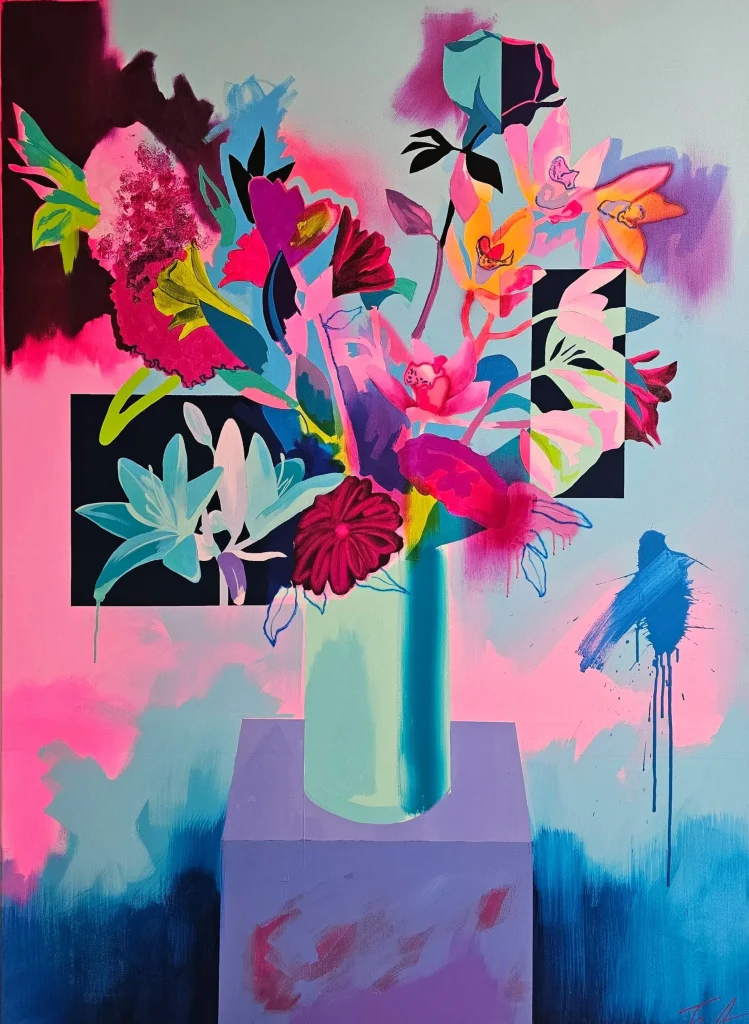
Picture: Tim Fowler
“It wasn’t planned,” he says. “It’s just my personality. I’ve got a really short attention span.
“I work on ten, fifteen, twenty pieces at a time and flick between them. If I had to finish one painting from start to end, I’d get bored.”
Over time, that approach evolved into a visual signature. The pinks became brighter, the scale larger, the confidence sharper. “It’s like handwriting,” Fowler explains. “The more you do it, the more it develops.”
That recognisability has become one of his greatest strengths. “Even if people don’t like it, they remember it. And that helps.”
Fowler’s subject matter has shifted dramatically over his career. Early work focused on derelict buildings and factories, inspired by Sheffield’s changing landscape. Later came portraits – often of celebrities – which sold well but left him creatively frustrated.
“I was painting people I didn’t care about,” he admits. “People were more interested in who it was than the painting itself.”
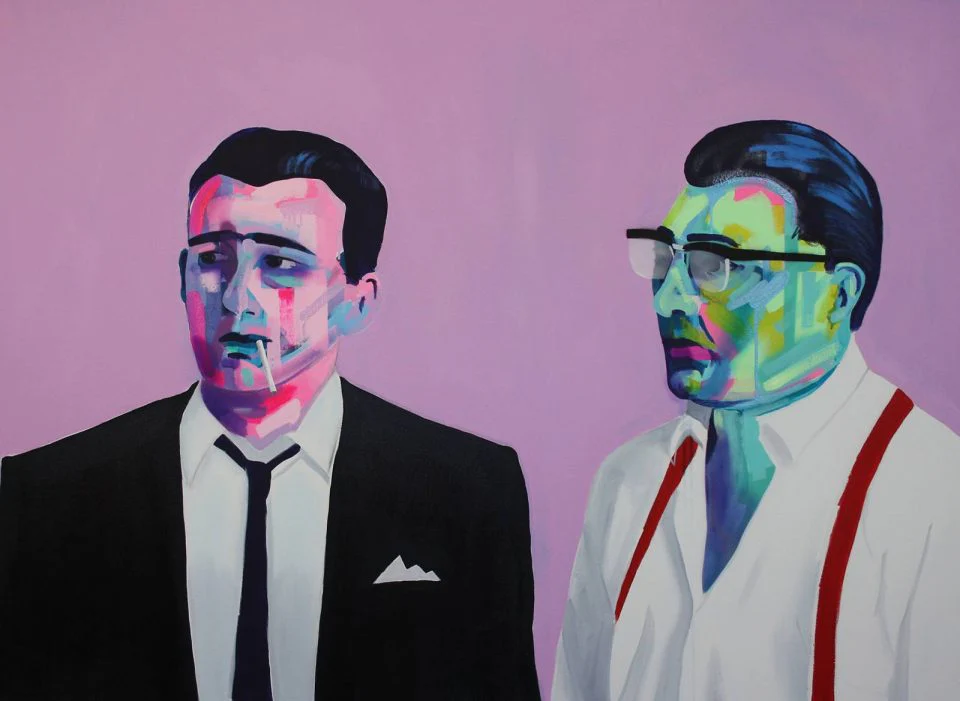
The turning point came almost by accident, when a fellow artist brought enormous banana plants into a shared studio space. Fowler began incorporating leaves into his work, then fully embraced botanical forms.
“It just clicked,” he says. “I enjoyed it more, and people responded to it more.”
Plants offered freedom: no expectations, no famous faces, and universal appeal. “There’s nobody who doesn’t like nature,” Fowler says. “That’s when it really blossomed.”
Fowler often paints at a monumental scale, sometimes using ladders or unconventional tools to reach every inch of the canvas. While smaller works keep his income steady, the largest pieces are about experimentation and enjoyment.
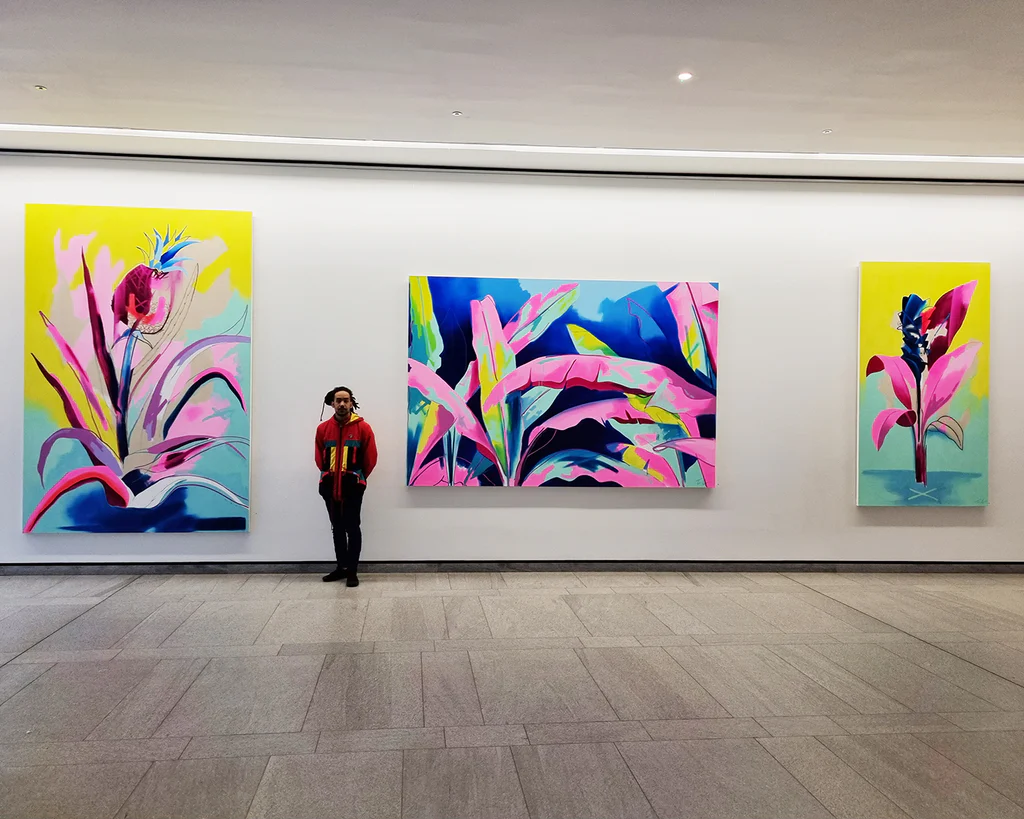
Picture: Tim Fowler
“My studio’s an old factory – 2,500 square feet,” he says. “I can just paint big without worrying where it’s going to end up.”
In a social-media-driven art world, the spectacle doesn’t hurt either. “Content is king,” Fowler laughs. “Painting a 12-foot canvas with a ladder looks good online.”
Working full time as an artist means long days alone in the studio, something Fowler had to adjust to after years in shared creative spaces. To fill the silence, he listens to what he sheepishly calls “creepypastas” – short, narrated horror stories.
“They’re just background noise,” he says. “Not too distracting, but it stops the silence.”
Outside the studio, the gym plays a vital role. “It gets me around other people,” he explains. “Even if I don’t talk to anyone. You need that balance, otherwise you can burn out.”
Despite international sales and major gallery representation, Fowler is cautious about how he defines success.
“The first level of success is making enough money to do it full time,” he says. “If you can pay for your studio, support your family and make work every day – that’s success.”
By that measure, he’s comfortable calling himself successful, even if it feels awkward. “Compared to a lot of artists, I’m very fortunate.”
Still, ambition hasn’t faded. “Nothing’s ever enough,” he admits. “I want bigger shows, international residencies, maybe America or Asia.”
Despite opportunities elsewhere, Fowler has no desire to leave Leicester – at least for now.
“I love it here,” he says. “It’s home. I’ve got a big studio, a good life, and I can get to London without paying London prices.”
He praises the city’s artistic talent but believes Leicester lacks enough accessible exhibition spaces for emerging artists. “The talent’s here,” he says. “We just need more places for people to show work.”
For aspiring artists, Fowler’s advice is simple but uncompromising: persistence.
“You’re not going to get picked up overnight,” he says. “Keep working. Keep making.”
He stresses the importance of part-time work that leaves energy for creativity, using social media as a tool rather than an obsession, and accepting rejection as part of the process.
“The only way you can fail as an artist is if you give up.”
It’s a message forged through years of quiet determination – the same laser focus that took a stubborn teenager inspired by Basquiat and turned him into one of Leicester’s most successful contemporary artists.
And in a studio glowing pink with possibility, Tim Fowler is already thinking about what comes next.
To find out more, visit: https://www.timfowler.co.uk/