
A pioneering midwife whose work reshaped how hospitals care for parents after stillbirth was formally recognised by the University of Leicester, in an honour that brings her life’s work full circle.
Agnes Nisbett, whose career spans more than four decades, was awarded an honorary Doctorate of Science at a graduation ceremony held at De Montfort Hall earlier this year. The award recognises her groundbreaking contribution to maternity care – particularly her work supporting mothers whose babies are born sleeping.
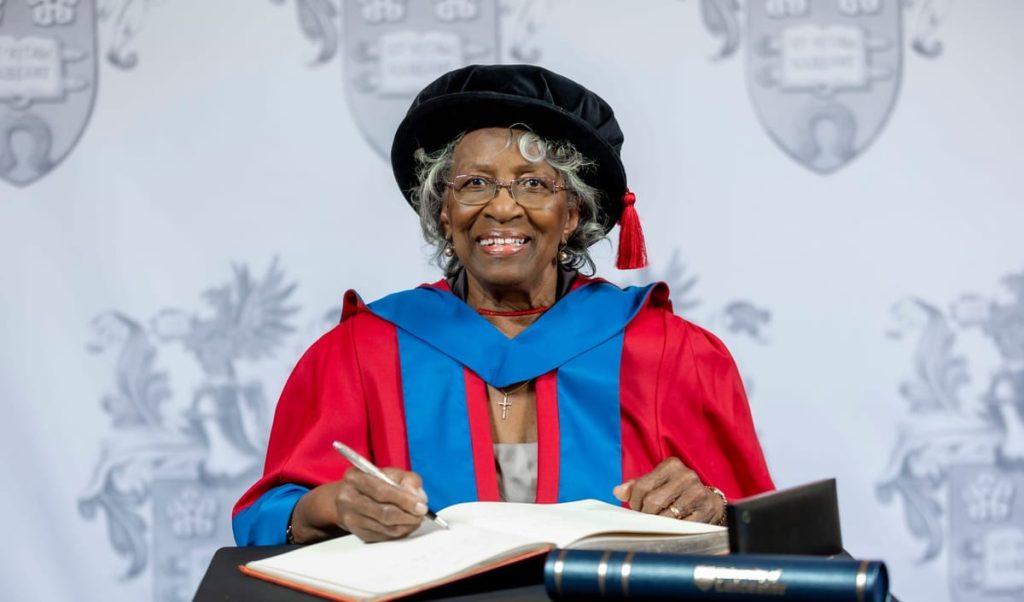
Picture credit: University of Leicester
For Agnes, the moment was deeply personal. “Becoming a doctor was a dream I had at a very young age,” she said. “Life had other plans, but the desire to learn, to serve and to make a meaningful difference never left me. Receiving this doctorate feels like a full-circle moment.”
That sense of purpose was forged through loss. In 1973, while working as a midwife at the Leicester Royal Infirmary, Agnes experienced the stillbirth of her son, John. At the time, standard practice meant babies were taken away almost immediately. Parents were rarely given information, keepsakes, or even the chance to say goodbye.
“I had him for five minutes,” she recalled. “That was the last time I saw him. I had nothing – no photographs, no handprints, nothing but my memory.”
Instead of allowing that trauma to silence her, Agnes channelled it into action. Returning to work, she became determined to change how stillbirth was handled – not just medically, but humanely. Her efforts led to the creation of the Born While Sleeping programme at Leicester Royal Infirmary, including the UK’s first dedicated hospital space for mothers who had experienced stillbirth, away from busy postnatal wards filled with the sounds of newborns.
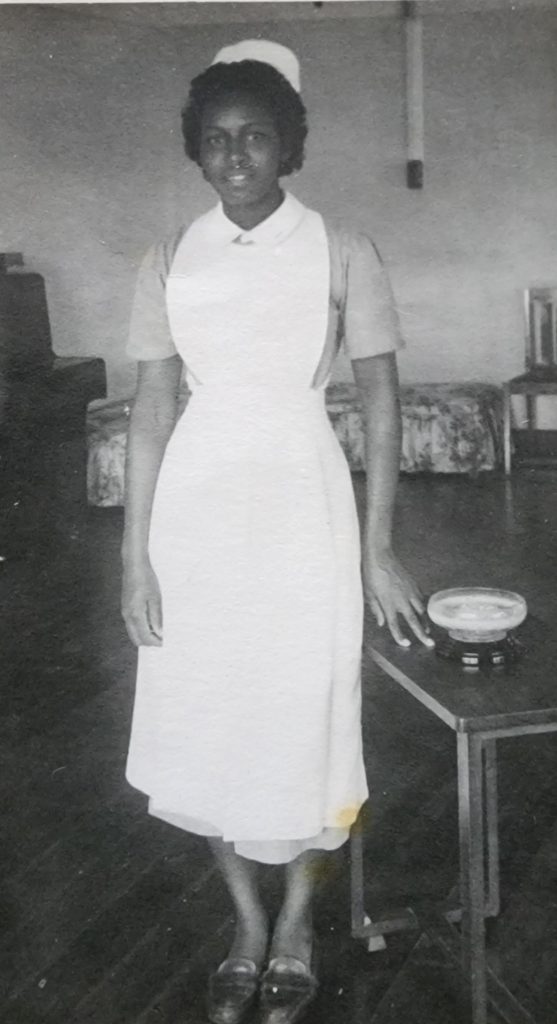
Picture: Agnes Nisbett
Thanks to initiatives Agnes introduced, parents were encouraged to see and hold their babies, to name them, and to keep physical mementoes such as clothes, photographs and handprints. Crucially, families were also given clear information about burial arrangements – something Agnes herself had been denied. It took her 21 years to discover where her own son had been buried.
“When I finally found out, a peace fell over me,” she said. “Little things really do mean a lot. They have a huge impact.”
Agnes’s journey to becoming one of Leicester’s most respected midwives began far from the city. Born on the Caribbean island of Nevis, she trained as a nurse on neighbouring St Kitts before travelling to the UK in 1959, encouraged by her matron and accompanied by her future husband, James. She settled first in Leeds, where she encountered both institutional and everyday racism.
At St James’s Hospital, she was told her overseas nursing qualification was not recognised and that she would have to retrain. She did so without complaint, quietly watching colleagues demonstrate skills she had already mastered. “I never let on that I was already trained,” she said. “Nobody knew – apart from the matron.”
Despite facing discrimination from both patients and colleagues, Agnes persevered, drawing strength from her Christian faith and a belief instilled by her mother: to care for others as family. She later trained as a midwife in Manchester before moving to Leicester in 1964, where she worked at Bond Street Hospital – the city’s first specialist maternity hospital – and later rose through the ranks to become a nursing officer at Leicester Royal Infirmary.
As a Black woman in a senior role, she felt constant pressure to prove herself. “You had to work twice as hard,” she said. “But I always gave the best care to everyone I met. It didn’t matter who they were.”
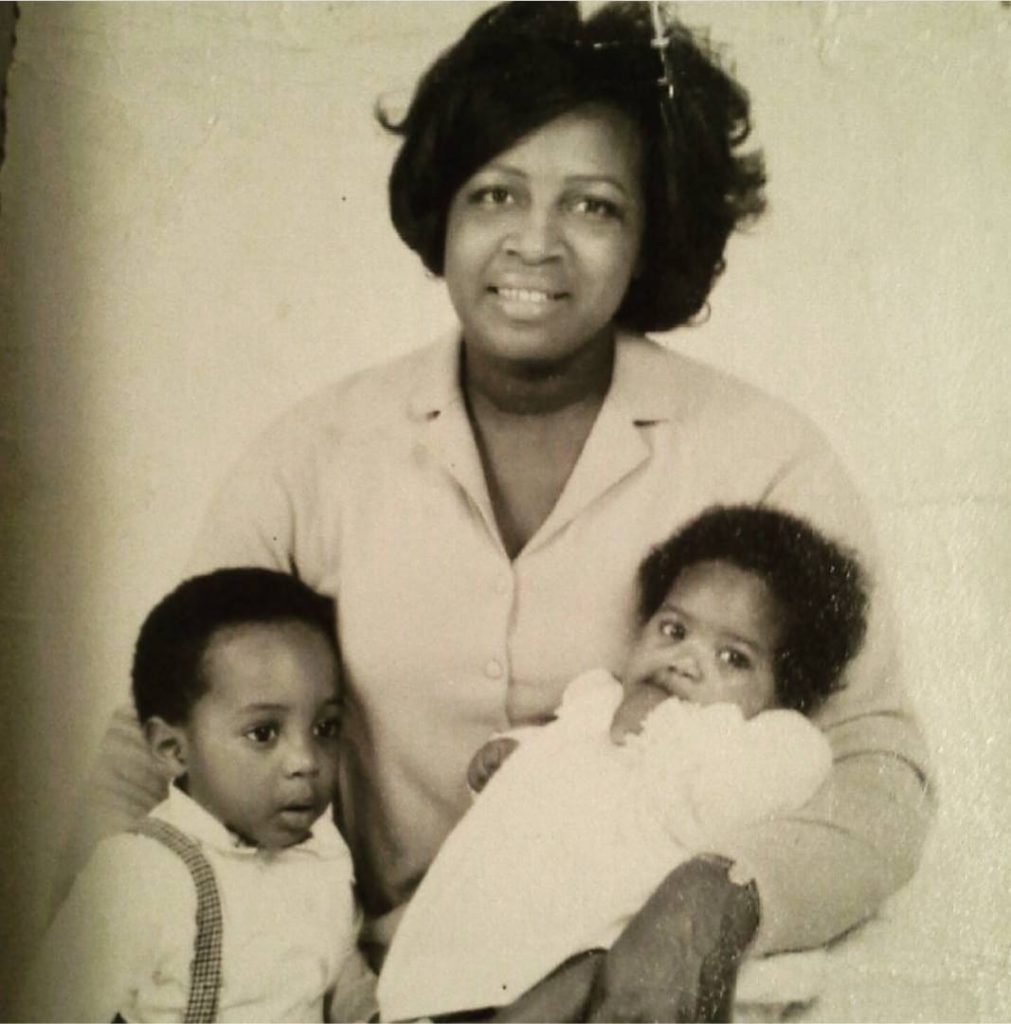
Over the years, Agnes delivered hundreds of babies – so many that even now, she is regularly stopped in the street by people she once helped bring into the world. “I’ve delivered generations,” she laughed. “It’s overwhelming – and wonderful.”
Her calm authority and empathy earned her the trust of doctors and patients alike. “I was there for the woman,” she said. “I’m a mother too. I know what labour is like. You can’t understand that unless you’ve lived it.”
Beyond stillbirth care, Agnes also worked tirelessly to promote healthcare awareness within Britain’s Caribbean community. Her contributions have previously been recognised with both a Pride of Britain Award and a TSB Community Hero award. Yet she describes the honorary doctorate as particularly meaningful – an acknowledgement that her life’s work, though different from her childhood dreams, mattered.
“I gave to other people and made each person special,” she said. “This recognition feels like a beautiful punctuation to a long, meaningful sentence.”
Today, the principles Agnes fought for are embedded in modern maternity care. Dedicated bereavement suites, aftercare, and open conversations about stillbirth are now standard practice in many hospitals – a far cry from the silence of the 1970s.
“I’ve turned pain into purpose,” she said. “That’s what I’m most proud of. Stillbirth isn’t hidden anymore. People can talk about it, and that matters.”
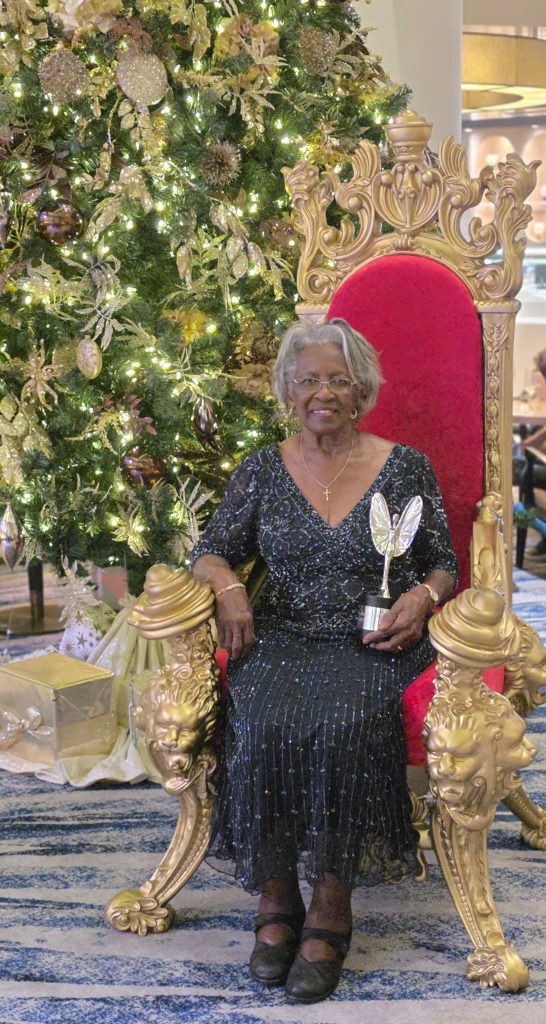
Presenting the award, University of Leicester President and Vice-Chancellor Professor Sir Nishan Canagarajah described Agnes as “a true pioneer”.
“She overcame racism in the workplace to forge a highly successful career in midwifery and nursing,” he said, “before turning her personal heartbreak into a determination to help others. Many parents of stillborn children in Leicester received outstanding support in their hour of need – and that is down to Agnes.”