
The first thing you notice in Lucy Stevens’ paintings is the colour. Bold, confident, luminous – turquoise, yellows, inky blacks – her birds seem to lift from the canvas, caught mid-movement…
There is joy here; these paintings hit you straight away, spreading a warm smile across your face, like the first moments of spring after a long winter.
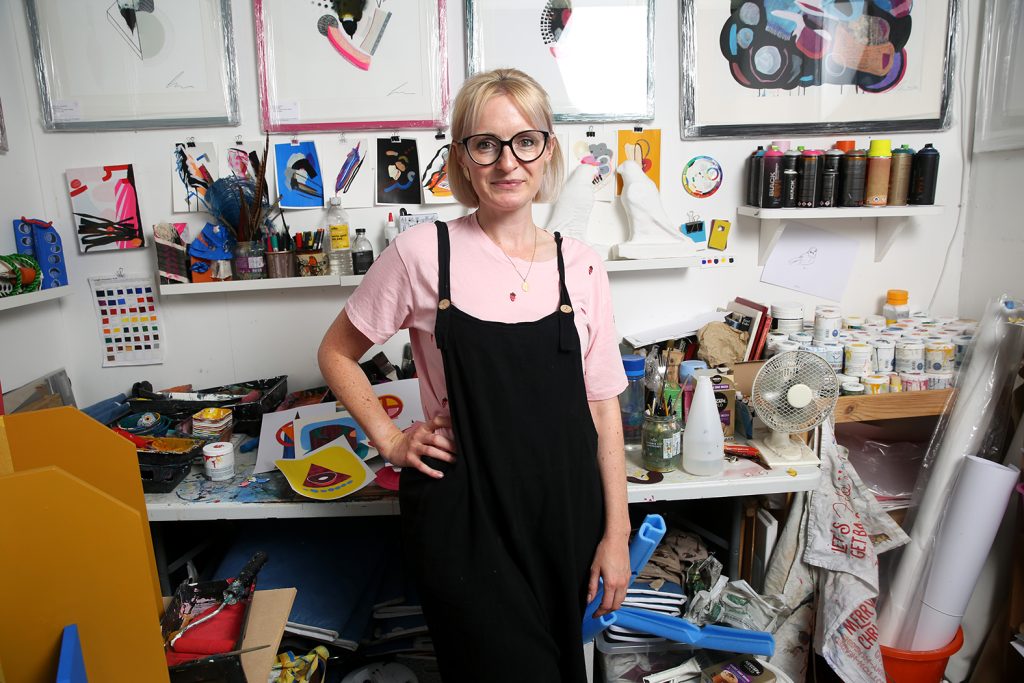
Picture credit: Lucy Stevens
Birds sit at the centre of the artist’s practice. Their movements, habits, and presence in everyday life have shaped her work for years. “Birds feel endless to me,” she tells Pukaar. “There’s always something new to notice, even with the ones you see all the time.” And in spring, when the world seems to wake again, their vitality becomes impossible to ignore.
A multidisciplinary British contemporary artist, Lucy Stevens explores our relationship with the natural environment through vibrant, coded artworks. Drawing inspiration from ornithology and colour theory, she often collaborates with experts in the natural world, including scientists, museum curators, ornithologists, photographers, and musicians. Her practice interprets birdsong, museum collections, and conservation data into mixed-media abstract portraits, colour charts on paper, sound works derived from field recordings, and, most recently, sculpture.
Based in Leicester, Lucy has been making art for most of her life. She drew constantly as a child before studying art formally, completing a foundation course, a degree, and a master’s at Nottingham Trent University. Her early work was darker and more experimental – drawing on horror films, sound, video, and installation. Over time, her focus shifted.
“I started recording birdsong,” she says. “Then I began visualising it. And eventually, I started painting birds.” That transition marked a turning point, moving her work toward life, light, and movement – qualities that echo the season of renewal itself.
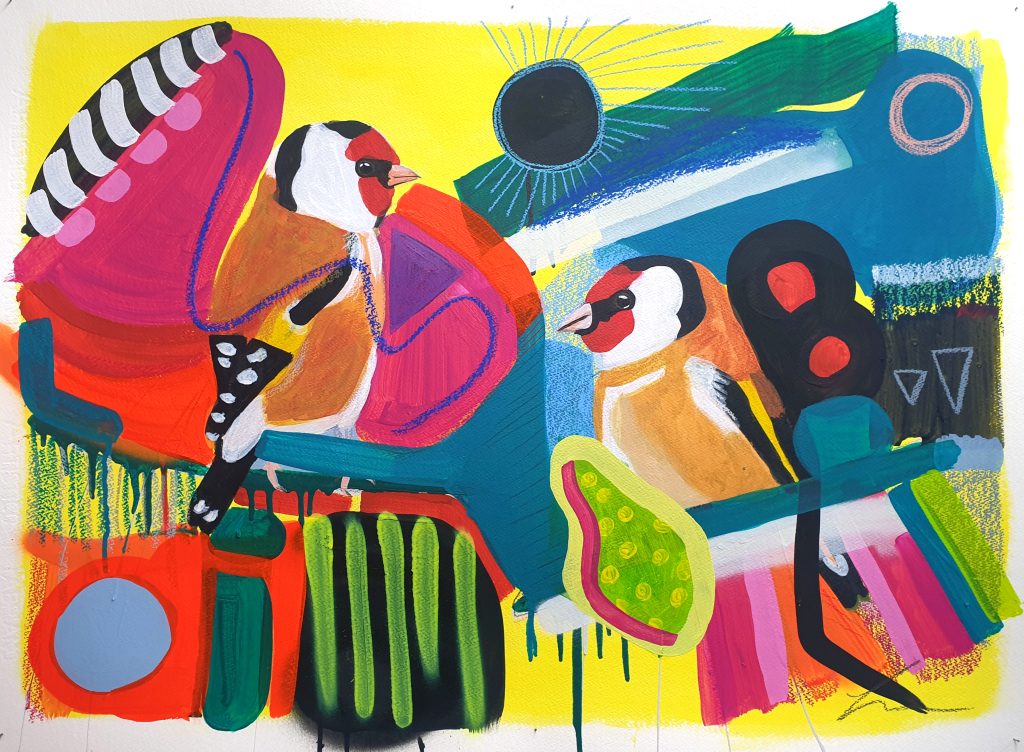
Today, birds are not treated as decorative subjects but as active, complex systems. The artist works with museum collections, ornithologists, and birdwatching groups, translating scientific information into visual form. A line might reflect a wingspan. A block of colour might relate to egg numbers. Migration routes become pattern and movement rather than maps.
“I like taking information that might feel dry on its own and turning it into something people can connect with,” she explains.
Spring is a particularly productive time. Living in Aylestone, Lucy spends much of her time walking locally – through meadows, along the canal, around the village – usually with her dog. These walks aren’t formal research, but birds regularly interrupt them, heralding the new season with their song.
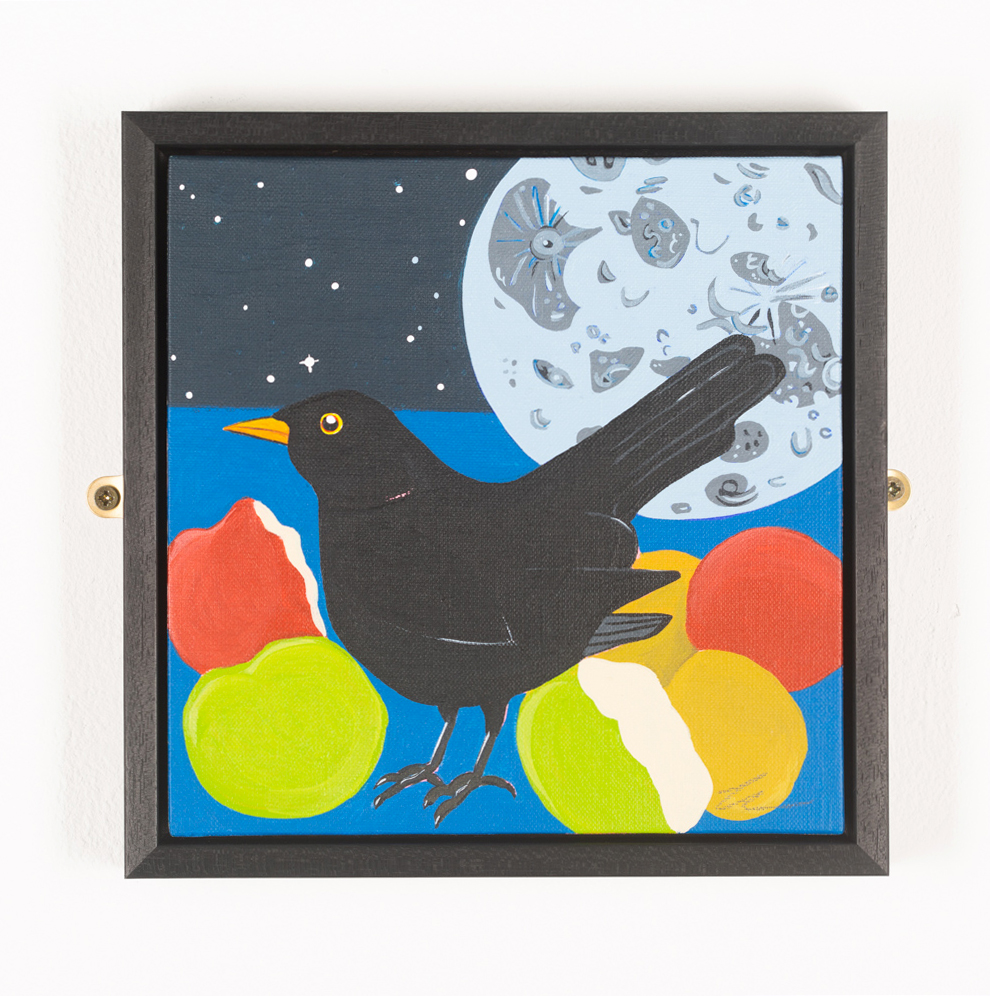
Her blackbird series came directly from this familiarity. “I just kept seeing them,” she says. “On fences, in gardens, right near my feet.” One blackbird, partially hidden in a flowering mahonia bush, stayed with her long after the walk ended. She didn’t photograph it; instead, she rushed home and sketched it from memory.
The resulting paintings are direct and self-assured. Blackbirds stand alert, their yellow eye-rings cutting sharply through dark feathers. “They’re bold,” Lucy says. “Quite fearless. Full of character.” There’s a sense of energy and awakening in these works, a reflection of the way spring stirs life all around us.
Stevens’ recent projects further highlight her commitment to blending science and art. Her collaboration with Leicester Museum & Art Gallery, Colour Coded Birds, presented bird specimens grouped by colour alongside contemporary artworks. Photographs of the specimens were combined with her instinctive mark-making, and colourful abstract wooden sculptures holding bird eggs interpreted ornithological data. She has also worked with The British Trust for Ornithology and Leicestershire & Rutland Wildlife Trust to explore the effects of climate change on migratory birds, culminating in her exhibition Chasing Seasons, where mixed-media artworks revealed declines in bird populations and changes in behaviour due to extreme weather.
Despite the clarity of her work, Stevens avoids heavy explanation. She prefers to leave space for viewers to bring their own experiences. “I don’t want to spoon-feed meaning,” she says. “I want the paintings to open things up.” And they often do. People respond with their own bird stories – garden visitors, childhood memories, associations with people they’ve lost. Birds, she notes, tend to stay with people, much like the fleeting magic of a spring morning.
Asked which bird she relates to most, she laughs, then says the wren. Small, easy to miss, but surprisingly powerful. “They’re not much to look at from a distance,” she says, “but up close they’re incredible.”
While birds remain central, Stevens continues to experiment. Some newer works move towards abstraction; others use birds as stand-ins for emotion – restraint, vulnerability, things left unsaid. Even when birds aren’t immediately visible, their structures remain in the background: flocking, habitats, rhythm, evoking the cycles of nature coming alive in spring.
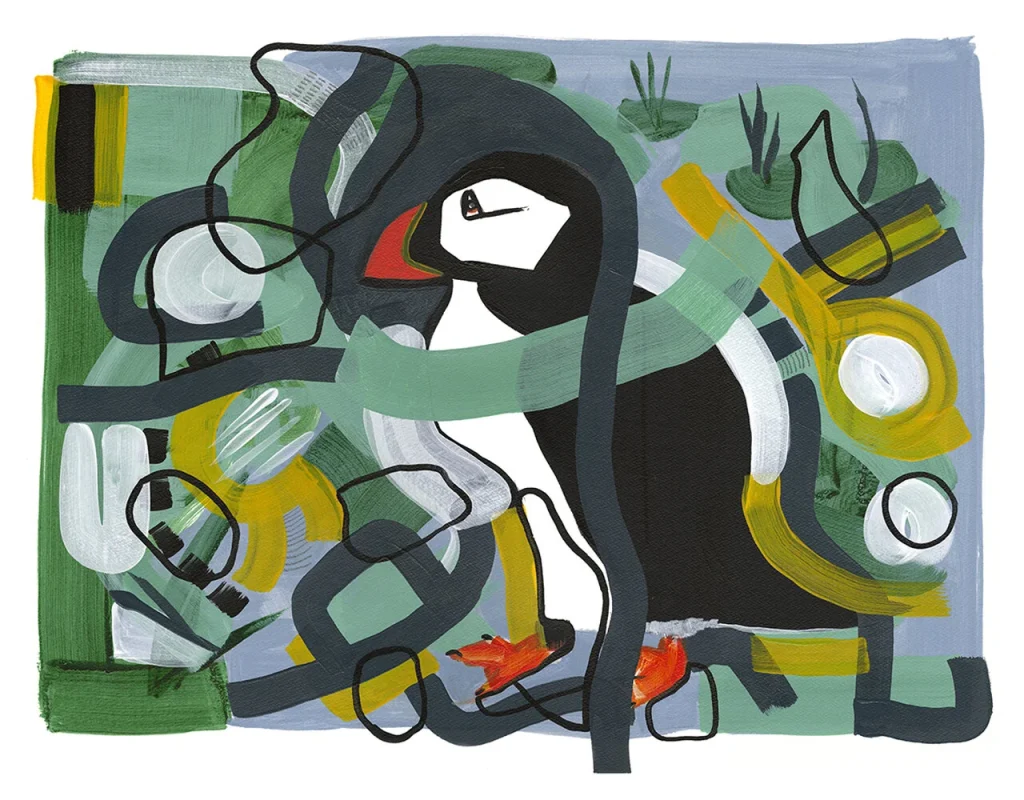
Painting offers her a rare sense of absorption. “Everything else drops away,” she says. “When it works, it feels right. Not always – but when it does, it’s special.”
Looking ahead, she hopes to travel – perhaps to Costa Rica – to paint hummingbirds. For now, though, she’s content with the birds close to home: familiar, reliable, returning each year, like the seasonal rhythm of spring itself.
In Lucy Stevens’ work, colour does the heavy lifting – pulling you in first – and the birds do the rest, holding your attention longer than you expect, leaving you with the quiet joy and renewal that only spring can bring.
To see more of Lucy’s work, visit: www.lucystevens.co.uk